
 Call Buderim
 Book Appointment

Flexible dentures have become increasingly popular as a way to replace missing teeth without visible metal clasps, and the disadvantages of flexible dentures are worth understanding before you commit to one. The base is a soft, bendable nylon instead of rigid acrylic, and that change affects how the dental appliance handles chewing, cleaning and repair.
This guide covers the cons of flexible dentures that show up day to day, how they compare with other tooth replacement options and when one still makes sense.
Quick Overview
- Flexible dentures are partial dentures with a thermoplastic nylon base and gum-coloured clasps, so no metal shows when you smile.
- The flexibility that makes the base comfortable also lets it move under load, pushing bite force into the gums rather than your natural teeth.
- They cannot be relined in the clinic like acrylic, and the surface roughens and stains as it ages.
- They suit a few missing teeth rather than a full arch, and your prosthetist judges suitability from the gap, the supporting teeth and your bite.
Below, we cover the material, the disadvantages in detail and who they suit.
What Are Flexible Dentures Made From?
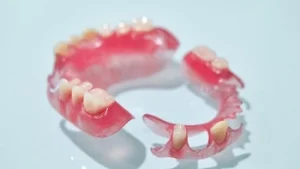 Flexible dentures are removable partial dentures pressed from thermoplastic materials, most often nylon. The flexible material is thin and tinted to gum colour, so the base follows the natural contours of your gums and the clasps blend into the tissue. Unlike traditional dentures, which require metal clasps to grip, a flexible partial holds on using the same soft material as its base. The teeth set into it are resin teeth.
Conventional dentures are built differently. A full denture or standard partial uses acrylic resin, or plastic over a light cobalt chrome frame, with clasps that grip the remaining teeth.
Flexible Dentures Disadvantages in Detail
Aesthetic appeal is the main advantage, and the limitations show up in how a soft base behaves over years of wear.
Not Suited to a Full Arch or a Long Span
A flexible denture is intended for a few missing teeth. Where teeth are missing across a long span, the base carries more load than a soft material can take without bending, so the denture flexes as you chew. Rigid alternatives handle that load better, whether an acrylic base or a cast metal framework. Current clinical evidence does not support a soft base for extended use.
Bite Force Spreads Unevenly
A rigid partial has a stiff connector and small rests that sit on your natural teeth, so chewing load is shared between teeth and gums. A flexible base has neither, so the force transfers into the soft tissue underneath. That uneven loading can cause gum irritation, bone loss beneath the denture and more movement in the teeth the clasps hold. Bite force is also lower without a rigid framework.
Relines and Repairs Are Harder
Gums and bone reshape after tooth loss, so every denture needs adjusting as the fit changes. Acrylic accepts new material readily, which makes a chairside reline possible. Nylon does not bond to relining acrylic in the same way, so a flexible denture cannot be relined in the clinic. Correcting the fit becomes lab work rather than a chairside adjustment, and in some cases a new denture may be the more practical option.
Staining, Plaque and Clasps That Loosen
The polished surface of nylon is softer than acrylic and scratches more readily in daily use. A rougher surface gives plaque more to hold onto, and staining is difficult to polish out once it sets in. Because the clasps lie over the gum margin rather than on the tooth, they also trap plaque against your remaining teeth, raising the risk of decay and gum problems.
Nylon also absorbs water in the mouth, which deforms it slightly and reduces its springiness. Around 55% of flexible partials replacing back teeth had lost clasp retention at twelve months.
Flexible, Acrylic and Metal Partials Compared
No material is better across the board, and each one has cases it suits. Acrylic is rigid and thicker through the base, and a tooth can usually be added later if you lose another. A flexible partial usually costs more up front than a basic acrylic plate. Metal dentures use a cast chrome framework that is thin and stiff, passing the load onto your natural teeth through rests, though the clasps can be visible. Flexible partials lead in natural appearance, and across a small gap they can feel less intrusive than a thick acrylic plate, while the evidence for how they hold up over years remains weak. Your remaining teeth and gums also need to be healthy enough to support any partial.
How to Clean Flexible Dentures Without Damaging Them
Because the surface marks and stains more easily, regular cleaning matters more here, as does the method. Brush the denture morning and night with a soft brush and mild soap. Toothpaste is too abrasive for a denture surface and scratches it, and hot water can change its shape and fit, so rinse with cold water only.
A soak in denture cleaning solution lifts food particles and bacteria off the surface, and keeping to the time on the packet protects the material. Leaving a denture in liquid for longer than that may weaken the base over time. Rinse it under clean water afterwards, then let it dry overnight in a clean container with airflow.
Take the denture out before you sleep, and brush your teeth and gums, especially where the clasps sit. We suggest a check-up every six months, because the fit of any denture drifts as gums change.
When a Flexible Denture Is Still a Sensible Choice
For a gap of one or two missing teeth, particularly at the front where a metal clasp would show, a flexible partial does the job with a natural look. It may also suit patients seeking a metal-free appliance, or anyone who has reacted to an acrylic base. Proper care extends how long a flexible partial lasts, and suitability comes down to your dental needs rather than the material alone.
Choosing the Right Partial Denture for Your Case
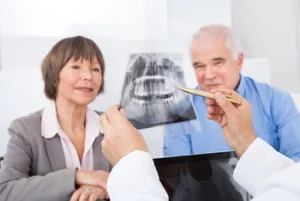 Missing teeth change how you chew and how your other teeth sit, and a partial that loads the wrong structures can loosen the teeth it clips onto. Our prosthetists at Custom Denture Clinic examine the gap, the supporting teeth and your bite, then talk through whether a flexible partial, an acrylic plate or a chrome framework fits your case. Our in-house lab handles repairs and adjustments on site, including same-day work where the design allows. Individual outcomes vary, and the recommendation follows the examination rather than a preference for one material. To discuss your options, please call us on (07) 5317 1023 or (07) 5315 8076.
Frequently Asked Questions
Do the disadvantages of flexible dentures apply to every brand?
Not all of them, and not to the same degree. Nylon is the most common, but other thermoplastics behave differently: some hold a clasp better, and some can be relined chairside. Ask your prosthetist which material they work with and what it means for your case.
How long does a flexible denture last?
There is no fixed figure. How long a set lasts depends on how many teeth it carries, how heavily you chew and how well it is cleaned. Book a review if a clasp stops holding, the denture lifts while you eat, or sore spots keep returning.
Can I have a flexible denture straight after an extraction?
Usually not straight away. Measurements normally start two to three months after teeth are taken out, which lets the gum and bone settle so the fit is accurate from the start. An immediate denture is an option if you do not want a gap in the meantime, and it will need adjusting as the site heals.
Will a flexible denture change the way I speak?
For the first few weeks, your speech may sound slightly different while your tongue and cheeks adjust, and you may hear the denture click when you talk. Reading aloud at home helps. Let your prosthetist know if it has not settled.
Does private health insurance cover flexible dentures?
Many extras policies contribute under major dental cover, and the amount depends on your level of cover, waiting periods and annual limits. Check with your fund, and ask us for an itemised quote comparing designs.
References
https://teeth.org.au/dentures
https://www.health.nsw.gov.au/denture-care


Recent Comments