

Dentures are a standard part of what we think about when we imagine the mouth and natural teeth. But what do they consist of? There is a lot of information out there, but most people don’t know what’s true and what’s not. This article will be going over eight facts you might not have known about dentures that will change your perspective on them!
What are dentures?
Dentures is the general term used to describe artificial teeth. They can come in a variety of different shapes and sizes. Dentures can be fitted with or without clasps, so they don’t slip around in the mouth. They are removable appliances, which means they can be taken out of the mouth for cleaning and care.
What are dentures made of?
Dentures are made of acrylic resin, which is what most artificial teeth are currently made of. The acrylic resin is what dental professionals mould to make your new set of teeth. Other materials can be used in dentures to keep them stronger and more durable than acrylic alone.
Denture adhesive holds the denture in place once it has been made. It can also be used when you are wearing partial plates to keep them in place without using hooks or clasps.
The different types of dentures
There are three different types of dentures that you should be aware of: partial plates, complete plates, and implant-supported dentures. They may be made with the same materials (acrylic resin, composite, or porcelain), but their coverage differs.
Partial dentures with plates are what most people know as “false teeth”. They can come with or without clasps, so they don’t slip around in the mouth. Partial dentures, also called conventional dentures, are what people tend to wear the most.
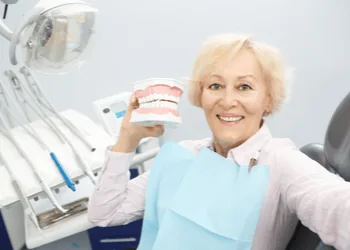
Complete dentures come in different shapes and sizes. What’s more, is that they can be just as heavy or light as your real natural teeth (especially if using porcelain teeth). Complete dentures can hold clasps for them to be fastened to flippers.
Implant-supported dentures are what people with no teeth or missing teeth can wear to support what is essentially an artificial palate. They don’t replace the full set of teeth, but what they do is keep what’s left in place and prevent them from sliding around. The implant can be used for cosmetic purposes, also called a flipper.
Some also consider immediate dentures as a type of dentures. These are the appliances your dentist uses the same day they extract your teeth, covering your missing teeth at once. However, because of its temporary use, many would still consider this to be a partial denture.
What are the myths about dentures?
Many different myths surround false teeth. The most common has to do with what would happen if you lose your dentures, what they contain, and what they do to your body. We will debunk these in more detail below.
Dentures are poisonous
False human teeth have been rumoured to contain mercury, which was popular in the early 19th century. The truth is, false teeth don’t contain mercury. The myth may refer to when dentists used amalgams solely for dental fillings.
Swallowing a loose tooth from your denture
Some people might be afraid of accidentally swallowing a tooth that would fall out of the denture. If that happens, it will either go through your digestive tract, or your gag reflex will make you cough it up, so no reason to worry.
Removing dentures
What would happen if a person took their dentures off for the night? If you are scared of what would happen, fear not. Your mouth retains the fit of your dentures; just make sure that you only remove them at night. But, if you take your denture more often than you should, your gums and tongue will retreat into the shape of your palate.
Wearing dentures for far too long
What happens to your body when you wear them for too long? False teeth can be worn for many years and what might happen is what’s called bone atrophy. Your jawbone starts to recede when what you are wearing in your mouth isn’t proper, and it causes what is called periodontal disease.
Unfortunately, what happens is that your teeth will eventually fall out. Your jawbone can’t hold what dentures are supporting on their own because what you’ve been wearing is not the right fit and has caused what’s called bone resorption, meaning bone loss.
Dentures are not for children
Children can wear what we call baby dentures. They usually have denture materials used as a palate expander to widen their narrow palate. The dentist will send full upper and lower impressions to the hospital. They will be exactly what their teeth looked like when they grew up from their gums. Kids can wear temporary dentures made from Teflon material. Just remember that these are temporary dentures acting as replacement teeth.
Dentures make you look older
Partial dentures aren’t what makes you look older. What can affect your image are the changes that happen when dentures are deteriorating. They can crack and chip. What happens when they do is called exfoliation. This means what may be inside your mouth would start to show on the outside. You may have plaque which can turn into tartar. Using denture cleanser soaking solution can help clean and maintain your modern dentures.
False teeth make you lose your real teeth
Artificial teeth will not make what’s left of your natural teeth fall out. If your removable partial dentures, for instance, are ill-fitting and no longer fit for the purpose, what happens is that they will eventually resorb the alveolar bone. This means that the remaining natural teeth you have may eventually fall out.
Complete or partial dentures are not comfortable

False teeth aren’t what people think they are. False teeth can cause what we call myofascial pain, which happens when what you’re wearing isn’t properly made, or you are wearing dentures that are too tight. You can also experience trigeminal neuralgia, described as pain in the cheeks and jawline. This can happen if you are already wearing ill-fitting composite or porcelain dentures.
Dentures don’t cause any damage to your body because their material isn’t toxic or poisonous. The bottom line? People who wear dentures, or any restorative dental appliance for the matter, should take good care of them. Cleaning dentures, maintaining proper oral health, and regular visits to your dentist can help care for your dental appliance.
How long do dentures last?
Dentures can last for many years if what you wear is properly maintained. Your choice of dental provider that performs the denture fabrication can also affect the quality of your appliance. Acrylic resin teeth or those made using composite material may last longer than wooden dentures. Porcelain teeth can also mimic perfectly how your natural teeth look like. They need adjusting and refitting. If you want a long-lasting missing teeth replacement option, you can also consider dental implants.
How often do they need to be replaced?
Denture wearers will need to come back for refitting and adjusting every three years or so, depending on several factors.
- denture type
- denture material
- denture care (denture cleaner, denture adhesives, etc.)
- dentures’ metal framework
- diet (What you eat can affect how long dentures can last because it affects your gums and natural teeth.)
Now that you know what are dentures made of, the myths surrounding porcelain teeth, what denture materials are used in making them, what should you take care of if wearing dentures. For more information, share this article with your friends and those interested in wearing restorative appliances like dentures.
Knowing more about dentures requires you to consult with a reliable professional. Please contact us for a convenient appointment:
- Contact Buderim: (07) 5317 1023
- Contact Caloundra: (07) 5315 8076
References:
Dental Health and Dentures.
https://www.webmd.com/oral-health/dental-health-dentures
Don’t let these Problems Get In The Way of Healthy Eating
https://www.consumerreports.org/healthy-eating/make-healthy-eating-easier/
What are Dentures Made Of?
https://www.colgate.com/en-us/oral-health/dentures/what-are-dentures-made-of
Dentures: Separating Myths from Reality
https://eurodenture.com/blog/dentures-separating-myth-reality/