
 Call Buderim
 Book Appointment

Losing teeth in the lower jaw can affect comfort, chewing, and confidence. When only a few teeth are missing, and healthy teeth remaining can still provide support, partial bottom dentures may be recommended.
Partial bottom dentures are a type of partial denture designed specifically for the lower jaw. They help replace missing teeth while working alongside remaining natural teeth. This guide explains how they work, the types available, cost considerations, and what to expect during treatment.
What Are Partial Bottom Dentures?
Partial bottom dentures are removable false teeth attached to a base that sits along the lower jaw. They are supported by existing teeth and sometimes by the gum and oral structure.
Partial dentures are designed to:
- Replace several teeth.
- Maintain alignment of neighbouring teeth.
- Support chewing and speech.
- Help maintain facial structure.
Unlike full dentures, which replace all teeth in the upper or lower jaw, lower partial dentures are typically recommended when several natural teeth remain and can help support and stabilise the appliance.
When Are Lower Partial Dentures Recommended?
A dentist may suggest a partial lower denture when: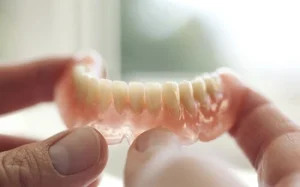
- There are several teeth missing.
- Only a few teeth remain.
- Healthy teeth remaining can provide support.
- Dental bridges are not suitable.
- Dental implants are not preferred.
If only a few teeth have been lost, partial dentures offer a practical denture solution without removing healthy teeth unnecessarily.
How Partial Bottom Dentures Stay In Place
The lower jaw presents unique challenges when designing a partial denture. Unlike the upper jaw, it does not have a broad palate area to assist with support. The tongue is also constantly moving, and the muscles of the cheeks and lips apply regular pressure. Because of this, stability depends on careful planning and precise design.
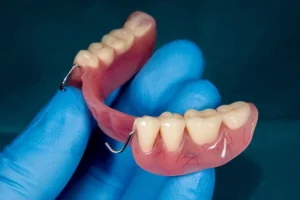
Retention mainly comes from the remaining natural teeth. Clasps are shaped to gently engage specific areas of those teeth, helping the denture resist lifting or shifting during speaking and chewing. The design must balance firmness with protection, so supporting teeth are not overloaded.
The fit along the gum tissue also plays a role. The denture base is shaped to follow the natural contours of the lower ridge. Even contact helps distribute chewing forces more evenly across the mouth rather than concentrating pressure in one spot.
Bite alignment is another important factor. When the upper and lower teeth meet evenly, it reduces unwanted movement of the appliance. If the bite is uneven, small adjustments may be required to improve balance.
Over time, natural changes in the jawbone and gum tissue can affect how the denture sits. Regular reviews allow the dentist to assess whether minor modifications are needed to maintain stability.
A well-designed lower partial denture should feel secure during daily activities without relying heavily on adhesive products. Stability is achieved through careful measurements, accurate impressions, and thoughtful placement of support elements.
When each of these factors is considered together, lower partial dentures can function reliably while working in harmony with the surrounding teeth and oral structures.
Types Of Partial Dentures For The Lower Jaw
There are different types of partial dentures available. Each option suits different denture needs.
Acrylic Partial Dentures
Acrylic partial dentures are made from acrylic resin. They are often used as a temporary dental appliance or as a cost-conscious long-term solution.
- Lightweight
- Easier to adjust
- May be more noticeable
Metal Partial Dentures
Metal dentures use a thin metal framework for support. They are:
- Stronger
- Thinner
- Often more stable
Metal clasps may be visible depending on the position of the front or the back teeth.
Flexible Partial Dentures
Flexible dentures use a softer material that bends slightly during insertion and removal. Flexible partial dentures can provide:
- A more natural appearance
- Increased comfort
- Less visible clasps
These are sometimes chosen when patients prefer partial dentures that are less noticeable in the mouth.
Are Partial Bottom Dentures Comfortable?
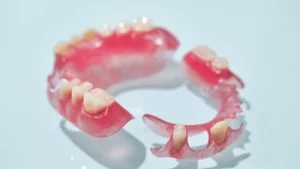 Many patients ask whether partial dentures are comfortable enough for daily use. There is usually an adjustment period after receiving new partial dentures.
During this time:
- The mouth adapts to the dental appliance.
- Minor sore spots may occur.
- Speech may feel different.
If discomfort persists, adjustments can be made. Partial dentures are designed to fit securely without causing ongoing irritation. Regular follow-up visits at a denture clinic help ensure comfort and stability.
Partial Dentures Vs Other Options
When replacing missing teeth, other options may be considered.
Dental Implants
Dental implants are placed into the jaw and act as artificial roots. They provide a long-term solution but require sufficient bone and may involve surgery.
Dental Bridges
Dental bridges use neighbouring teeth to support replacement teeth. They are fixed in place but require reshaping adjacent healthy teeth.
Partial bottom dentures are often chosen when implants are not suitable or when patients prefer a removable denture.
How Partial Dentures Support Oral Health
Replacing missing teeth helps maintain oral health. When teeth are lost and not replaced:
- The remaining teeth may shift.
- Bite can change.
- Chewing may become uneven.
Partial dentures offer support by maintaining spacing and helping protect the natural shape of the mouth. They also help maintain facial structure, especially when several teeth have been lost.
The Process Of Getting A Partial Lower Denture
The process usually begins with an initial consultation. During this visit:
- The dentist examines the mouth.
- The number of teeth remaining is assessed.
- Treatment options are discussed.
Making dentures involves impressions of the lower jaw. Modern dental technology allows for improved fit and natural shape.
The dentist designs the denture based on:
- How many teeth are missing
- The position of the back teeth and the front teeth
- The strength of existing teeth
- Overall oral structure
Once fitted, instructions are given on proper care and wear.
Caring For Partial Bottom Dentures
Proper care helps ensure long-term comfort and durability.
Daily care includes:
- Cleaning with a soft brush
- Rinsing after meals
- Avoiding very hard foods initially
Some patients use denture adhesive for added security, though many partial dentures stay in place without it.
Regular dental visits allow monitoring of both the denture and the remaining natural teeth.
What About Partial Dentures Cost?
Partial dentures cost depends on several factors:
- Type of material (acrylic resin, flexible, metal framework).
- Complexity of the design.
- Number of additional teeth replaced.
- Laboratory work involved.
During consultation, the dentist will explain the available options and provide a clear breakdown of the costs based on your specific denture design and treatment needs.
Can Partial Dentures Be Repaired?
Yes. Denture repairs may be required if:
- The denture cracks.
- Clasps loosen.
- Additional teeth are lost.
An existing partial denture can sometimes be adjusted or modified. However, if oral changes are significant, new partial dentures may be recommended.
Who Is Suitable For Partial Bottom Dentures?
Suitability for partial bottom dentures depends on more than simply having missing teeth. A detailed assessment helps determine whether the remaining teeth and supporting structures can provide long-term stability.
One important consideration is the condition of the existing teeth. They must be strong enough to support gentle clasping forces. Teeth affected by significant mobility or advanced decay may require treatment before a partial denture is considered.
Gum health also plays a key role. Healthy gum tissue provides a stable foundation and helps reduce irritation. If inflammation is present, it should be managed first to support better outcomes.
Jaw shape and bone support influence design choices. In some cases, changes in the lower ridge following tooth loss may affect how the denture base is formed. The dentist evaluates these features to ensure the appliance sits evenly.
Daily habits are also relevant. Patients who are comfortable removing and cleaning a dental appliance often adapt well to partial dentures. Good oral hygiene supports both the remaining teeth and the appliance itself.
Lifestyle factors may also be discussed. For example, individuals who speak frequently for work may benefit from careful design adjustments to assist speech clarity during adaptation.
Timing can influence suitability as well. When teeth have been missing for an extended period, minor shifting may have occurred. Planning takes these changes into account to restore balance.
Ultimately, suitability is determined through a personalised assessment. The goal is to provide a solution that works with the existing teeth and oral structures while maintaining comfort and function over time.
Eating And Daily Life With Lower Partial Dentures
During the first few weeks, eating soft foods is helpful while adjusting. Gradually, most patients return to a normal diet.
Partial dentures offer improved chewing ability compared to leaving gaps. However, very sticky or hard foods may still require caution.
Speaking may feel slightly different at first, but the mouth adapts quickly.
Long-Term Considerations
Partial bottom dentures are designed to function reliably over time, but the lower jaw is not static. Natural changes occur gradually in the bone and gum tissue after teeth are lost. These changes can influence how a denture fits years after it is first made.
When teeth are removed, the jawbone in that area slowly reshapes. This process happens at different rates for different people. As the ridge alters slightly, the way the denture rests on the gum may also change. Even small variations can affect stability or bite balance.
 The remaining natural teeth may also shift subtly over time. Everyday chewing forces and normal ageing can influence tooth position. Regular reviews allow the dentist to monitor these movements and assess whether minor adjustments are needed to maintain proper alignment.
Another long-term consideration is how chewing forces are distributed. A well-balanced denture spreads pressure evenly across supporting teeth and gum tissue. If the bite becomes uneven, certain areas may carry more load than intended. Periodic checks help ensure forces remain balanced.
Relining may sometimes be recommended in the future. This process reshapes the inner surface of the denture to match changes in the gum contour. It can improve fit without requiring a completely new appliance.
Material wear is another factor. Over many years, artificial teeth may show gradual surface wear from normal use. Monitoring helps determine when maintenance or replacement is appropriate.
With consistent review and maintenance, partial bottom dentures can continue to function effectively as the mouth changes. Ongoing assessment supports stability, protects the remaining teeth, and helps maintain comfort and oral health over the long term.
Final Thoughts
Partial bottom dentures are designed to replace several teeth while preserving the remaining natural teeth. They restore function, support facial structure, and help maintain oral health.
Whether made from acrylic resin, flexible materials, or a metal framework, lower partial dentures provide a practical solution when healthy teeth remain. Understanding your denture needs, the types of partial dentures available, and the care involved can help you feel confident in your decision.
If you’re concerned about missing lower teeth, difficulty chewing, or changes in your bite, book a consultation with us at Custom Denture Clinic or get in touch at the location that suits you.
Contact Buderim: (07) 5317 1023
Contact Caloundra: (07) 5315 8076
Resources
“Kubala, J. (2023). ‘Soft Food Diet: Foods to Eat and Foods to Avoid’. Healthline, 15 March. San Francisco, CA: Healthline Media. https://www.healthline.com/nutrition/soft-food-diet”
“Colgate. (2023). ‘What Is Good Oral Hygiene?’. Colgate, 9 January. New York, NY: Colgate-Palmolive Company. https://www.colgate.com/en-us/oral-health/adult-oral-care/what-is-good-oral-hygiene”
“Healthdirect Australia. (2025). ‘Dental Bridge’. Healthdirect Australia, February 2025. Sydney, NSW: Healthdirect Australia. https://www.healthdirect.gov.au/dental-bridge”
“Cleveland Clinic. (2022). ‘Hypodontia (Missing Teeth)’. Cleveland Clinic, 16 September. Cleveland, OH: Cleveland Clinic. https://my.clevelandclinic.org/health/diseases/24192-hypodontia-missing-teeth”

If you are missing one or more teeth, but still have some remaining on your arch, your dentist may recommend a partial denture as a Read more

If you have several missing teeth but not an entire arch, you may be eligible for partial dentures. In order to support a partial denture, Read more

If you have lost a tooth, there are a few different ways that you can complete your smile. A dental bridge, a dental implant and Read more

Don't let multiple missing teeth ruin your smile. Your prosthetist can provide a removable partial denture to restore your smile and confidence and prevent the Read more
Recent Comments