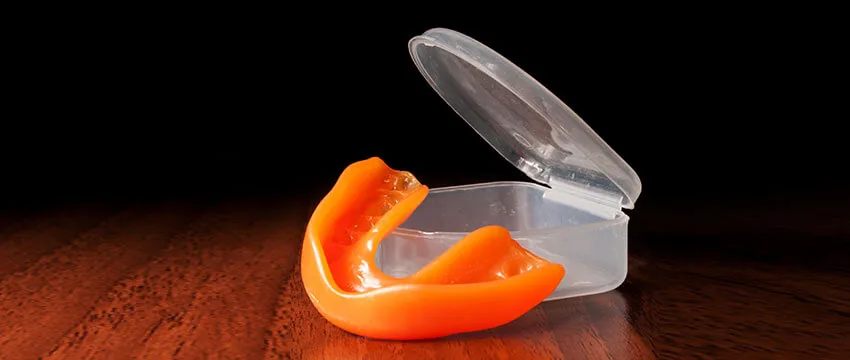
How Do Mouthguards Work to Protect Teeth from Injury?


Mouth guards do an important job of protecting your teeth and soft tissue from injury.

Mouth guards do an important job of protecting your teeth and soft tissue from injury.
If you have just started wearing dentures, you should know from the outset that it will take some getting used to before your dentures start to feel natural.
It might surprise you to know, but believe it or not, a mouth guard should fit your mouth contours snugly in order to provide the best level of protection.
Having your denture fitted for missing teeth is a very exciting time, as you can restore function and form to your mouth and be able to bite and chew with the same force as your natural teeth.
Even though the baby teeth fall out to make way for adult teeth, it’s important that the milk teeth are looked after.
If you are missing one or more teeth, but still have some remaining on your arch, your dentist may recommend a partial denture as a tooth replacement.
Mouth guards do an important job at protecting your teeth, soft tissues and tongue from impact, especially when playing sports.
When your denture is new, you can expect a comfortable fit, but as time goes on, you might notice that it starts slipping or sore spots develop in your mouth
Believe it or not, sports and leisure activities are the leading causes of dental injuries, but if you know how do mouthguards work.
It might surprise you to know, but believe it or not, a mouth guard should fit your mouth contours snugly in order to provide the best level of protection