What Are Digital Dentures? Understand How They Benefit Your Oral Health


Find out ‘what are digital dentures’ and how they benefit your oral health. Get a better fit and comfort from digital dentures, using computer-aided design.

Find out ‘what are digital dentures’ and how they benefit your oral health. Get a better fit and comfort from digital dentures, using computer-aided design.
We explain the types of dentures that are made & when you might need immediate partial or complete dentures. Find out about your tooth replacement options.
Find out how to use denture cleaning tablets to improve your oral hygiene. Get plaque-free dentures with these practical denture cleaning tips.
Dentures are a standard part of what we think about when we imagine the mouth and natural teeth. But what do dentures consist of? There is a lot of information out there, but most people don’t know what’s true and what’s not. This article will be going over eight facts you might not have known about dentures that will change your perspective on how they work!
Need to know more about caring for dentures? It’s easier than you think. Read our denture care tips and improve your oral hygiene and comfort.
We explain the do’s and don’ts of how to make your dentures fit better, and why only your dentist can make adjustments. Find out how to handle discomfort.
Denture cleaning is as important as keeping your natural teeth clean. Following the correct denture care procedure can keep your mouth free of bacteria and inflammation. Let’s take a closer look at “how often should dentures be cleaned?”.
Your mouth is full of bacteria that is kept under control through oral hygiene. When you brush your teeth, soft tissue and tongue, you are removing the sticky build-up of plaque that develops over your mouth surfaces. If this plaque is not removed it can calcify and turn into a substance called tartar that can lead to inflammation and decay of any remaining teeth. It can also cause irritation and sores to develop on the surfaces that are in contact with your dentures. Regular denture cleaning removes plaque and bacteria, gives you fresher breath and ensures a high level of oral hygiene.
It’s important that you remove and rinse your dentures after every meal. This prevents food and debris from getting trapped in your dentures.
Make sure that you clean your mouth each time you remove your dentures for cleaning. It doesn’t make sense to clean your dentures and return them to an unclean mouth, as this will just transfer the bacteria back onto your prosthesis.
Brush your dentures and any remaining natural teeth twice a day to keep them clean and free of stains. You should use a soft-bristled toothbrush, cleaning each surface of each false tooth, and mild denture cleaner or soap. Dentures need to be removed before cleaning, and this actually makes it easier to ensure you do a thorough job at cleaning them.
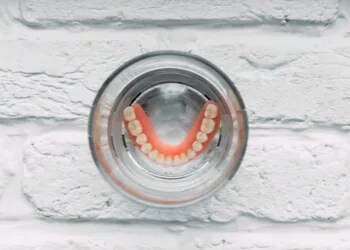
Soak your dentures overnight. Soaking dentures in water overnight ensures they keep their shape so that they fit your mouth well.
Once or twice a week it is a good idea to give your dentures a deep clean, using a denture soak or a solution of water and vinegar. This will remove any calcified deposits that you may have missed with brushing. Just remember to rinse them thoroughly before you put them back into your mouth. Partial dentures should not be soaked in vinegar solution as it can cause the metal clasps to deteriorate.
Your denture care routine is similar to caring for your natural teeth, except that dentures should be rinsed after every meal. Don’t forget to soak them regularly.
Cleaning your dentures regularly keeps them free of stains and in good condition for longer. It also ensures you have a clean mouth and fresh breath so the health of your oral cavity is not compromised. Your dentist will inspect the condition of your dentures when you have your regular checkups, so don’t forget this twice a year. He or she can help you with denture care tips if you have any questions or concerns.
To find out more about how often should dentures be cleaned, or for more information about tooth replacement options please contact us.
Caring for your dentures correctly and consistently is an essential step in maintaining your oral health. A denture needs to be maintained like your natural teeth
Dentures offer patients an effective replacement for lost or missing teeth. Also known as false teeth, a denture can be partial for the replacement of one or more teeth in an arch
Mouth guards do an important job of protecting your teeth and soft tissue from injury.