How to Fit a Mouthguard? Your Protection From Sports or Training Session


How to fit a mouth guard? The most important thing to remember is that the mouthguard must be fitted correctly for it to offer protection.

How to fit a mouth guard? The most important thing to remember is that the mouthguard must be fitted correctly for it to offer protection.
If you need tooth extractions, dentures take longer. We explain how long to get dentures if you need to have extractions. Find out about getting dentures.
How to use a mouth guard for the most protective fit to avoid injury? Learn how to care for custom mouth guards to keep them in optimal condition.
We explain the do’s and don’ts of how to make your dentures fit better, and why only your dentist can make adjustments. Find out how to handle discomfort.
We explain why mouthguards for children are so important, especially in contact sports. Find out about sports mouthguards & how they can protect your kids.
We explain how the denture relining procedure works and why a denture reline needs to be done on a regular basis. Restore comfort when eating and speaking.
Here’s the science behind mouthguard use to understand ‘do mouthguards prevent concussions’. Play safe and protect your teeth and head with a mouthguard.
This is what you need to know about emergency denture repair and why it’s important to have your dentures fixed immediately. Here are the dos and don’ts.
A warm and confident smile is one of the most attractive features a person can possess. Brushing and flossing twice a day, as well as regular visits to your dentist can keep your teeth in great condition. But, dental injury can pose a threat to your smile if you do not protect your teeth well when playing contact sports and engaging in recreational activities. Today we are going to have a look at how to protect your teeth from dental injury by wearing sports mouthguards.
We all get one set of permanent or adult teeth that needs to last for our entire lifetime, and for most people, diligent dental hygiene can keep dental decay at bay. But if you are an active sports player or enjoy high-risk recreational activities, you may not be aware of the fact that even though these activities can keep you fit and healthy, they can put your teeth at risk of damage and injury.
Dental injuries are expensive to treat. They can cause downtime, which means time away from work or school, and they can cause embarrassment until they have been resolved. Sports mouthguards are the only way to cushion your mouth and teeth against dental injury and to prevent debilitating and serious consequences.
Sports mouthguards that are custom-fitted for your mouth, create an effective cushion or barrier that stops your jaws from impacting one another. Sports mouthguards are even more important if you wear orthodontic braces as braces can cause damage themselves.

Wearing a protective mouthguard can
You can buy mouthguards from sports stores that are made in standard sizes. You can also buy boil and bite mouthguards but it’s important that you have your sports mouthguards custom-made for your mouth. A custom mouthguard ensures you can breathe and communicate easily while playing sports. It offers the best barrier against impact, by absorbing the shock and distributing it over a bigger surface area.
When worn consistently and correctly, sports mouthguards provide a comfortable and reliable way to look after your teeth. They should not cause a gag reflex and should be odourless and tasteless.
Wearing a protective helmet protects your skull, but it also protects your teeth from impact and damage in the event that you fall down.
If you are someone who grinds their teeth, especially at night, wearing a night guard can help you to avoid damage to your teeth. Constant grinding and clenching can weaken, crack and chip your teeth.
If you want to know more about how to protect your teeth, you should speak to your dental practitioner about having a custom mouthguard fitted. Play safe and be prepared. Contact us for an appointment
Denture cleaning is as important as keeping your natural teeth clean. Following the correct denture care procedure can keep your mouth free of bacteria and inflammation. Let’s take a closer look at “how often should dentures be cleaned?”.
Your mouth is full of bacteria that is kept under control through oral hygiene. When you brush your teeth, soft tissue and tongue, you are removing the sticky build-up of plaque that develops over your mouth surfaces. If this plaque is not removed it can calcify and turn into a substance called tartar that can lead to inflammation and decay of any remaining teeth. It can also cause irritation and sores to develop on the surfaces that are in contact with your dentures. Regular denture cleaning removes plaque and bacteria, gives you fresher breath and ensures a high level of oral hygiene.
It’s important that you remove and rinse your dentures after every meal. This prevents food and debris from getting trapped in your dentures.
Make sure that you clean your mouth each time you remove your dentures for cleaning. It doesn’t make sense to clean your dentures and return them to an unclean mouth, as this will just transfer the bacteria back onto your prosthesis.
Brush your dentures and any remaining natural teeth twice a day to keep them clean and free of stains. You should use a soft-bristled toothbrush, cleaning each surface of each false tooth, and mild denture cleaner or soap. Dentures need to be removed before cleaning, and this actually makes it easier to ensure you do a thorough job at cleaning them.
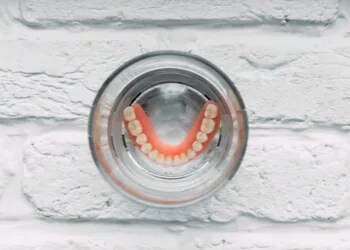
Soak your dentures overnight. Soaking dentures in water overnight ensures they keep their shape so that they fit your mouth well.
Once or twice a week it is a good idea to give your dentures a deep clean, using a denture soak or a solution of water and vinegar. This will remove any calcified deposits that you may have missed with brushing. Just remember to rinse them thoroughly before you put them back into your mouth. Partial dentures should not be soaked in vinegar solution as it can cause the metal clasps to deteriorate.
Your denture care routine is similar to caring for your natural teeth, except that dentures should be rinsed after every meal. Don’t forget to soak them regularly.
Cleaning your dentures regularly keeps them free of stains and in good condition for longer. It also ensures you have a clean mouth and fresh breath so the health of your oral cavity is not compromised. Your dentist will inspect the condition of your dentures when you have your regular checkups, so don’t forget this twice a year. He or she can help you with denture care tips if you have any questions or concerns.
To find out more about how often should dentures be cleaned, or for more information about tooth replacement options please contact us.